The role of AI in industry is shifting from optimisation to authorship, moving beyond analysing systems to actively designing them. As simulation, data and autonomous agents converge, engineering is becoming a continuous, machine-driven process where physical outcomes are defined long before anything is built.
The application of artificial intelligence is extending beyond automation and analytics into the core processes of engineering and manufacturing, as NVIDIA used its GTC conference to outline how AI systems are beginning to take on roles traditionally carried out by human designers and engineers. The company’s latest announcements suggest that industrial workflows are moving toward a model in which AI agents can plan, simulate and optimise complex systems with increasing autonomy.
At the centre of this shift is a growing ecosystem of industrial software providers integrating AI into design and engineering platforms. Companies including Cadence, Dassault Systèmes, Siemens and Synopsys are developing AI-driven agents capable of orchestrating complex workflows, from semiconductor design through to system-level verification. These agents are designed to operate across multiple stages of the engineering process, reducing the need for manual intervention and enabling faster iteration cycles.
This reflects a broader transformation in how industrial systems are developed. Traditional workflows, often fragmented across multiple tools and teams, are being replaced by more integrated environments in which AI can coordinate tasks, manage dependencies and optimise outcomes across the entire lifecycle of a product.
Simulation replaces iteration
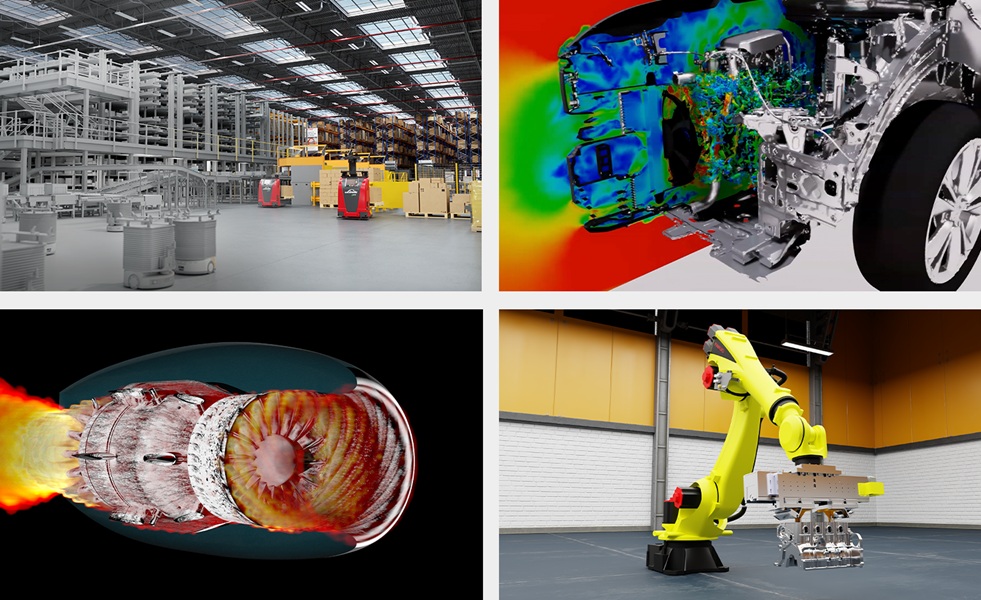
One of the most significant changes lies in the increasing role of simulation. GPU-accelerated tools are enabling high-fidelity modelling of physical systems, allowing engineers to test and refine designs virtually rather than relying on time-consuming physical prototypes. This approach is being applied across sectors including automotive, aerospace and energy, where complex simulations can now be run at speeds that were previously impractical.
By reducing the time required to evaluate different design options, simulation is becoming a central component of the engineering process. This not only accelerates development cycles but also enables more comprehensive exploration of design possibilities, particularly in areas such as aerodynamics, electromagnetics and materials performance.
The integration of AI into these simulation environments further extends their capabilities. Agents can analyse results, adjust parameters and run additional scenarios autonomously, effectively creating a feedback loop in which systems refine themselves over successive iterations.
From tools to collaborators
The emergence of AI agents within industrial software points to a deeper shift in the role of technology within engineering. Rather than serving solely as tools that execute predefined tasks, these systems are beginning to function as collaborators that can contribute to decision-making processes.
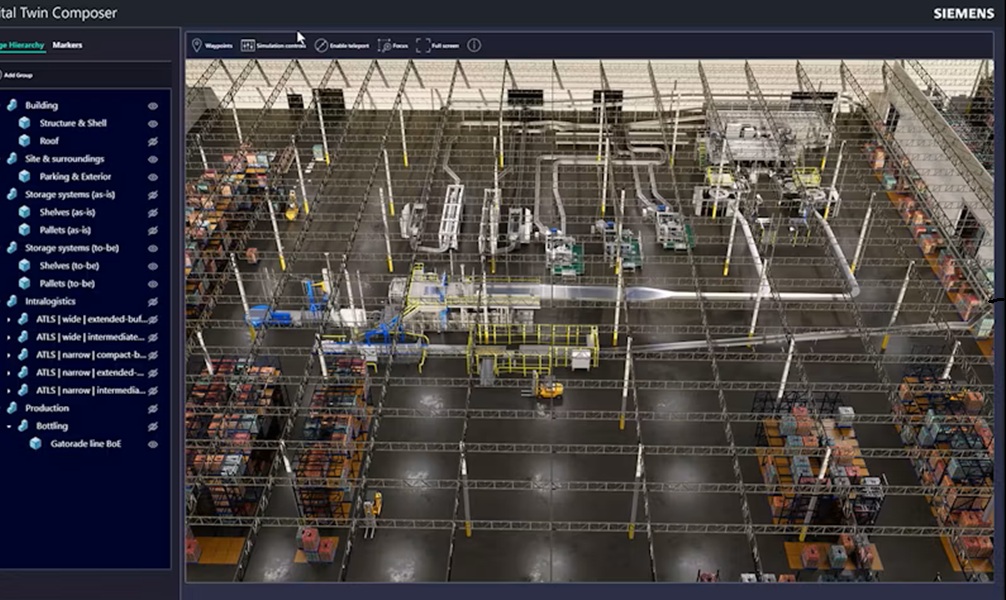
Manufacturers and industrial organisations are already applying these capabilities to optimise production lines, improve product performance and reduce time to market. By integrating AI into both design and operational workflows, companies can create more responsive and adaptive systems that evolve as new data becomes available.
This transition also has implications for the broader industrial landscape. As AI becomes embedded within core engineering processes, the distinction between design, simulation and production begins to blur, creating a more continuous and data-driven approach to manufacturing.
The developments presented at GTC indicate that this transformation is gaining momentum. As AI systems take on more complex roles within engineering and manufacturing, the question is no longer whether these processes can be automated, but how far they can be redefined. In that context, artificial intelligence is not only changing how products are made, but increasingly how they are conceived in the first place.